
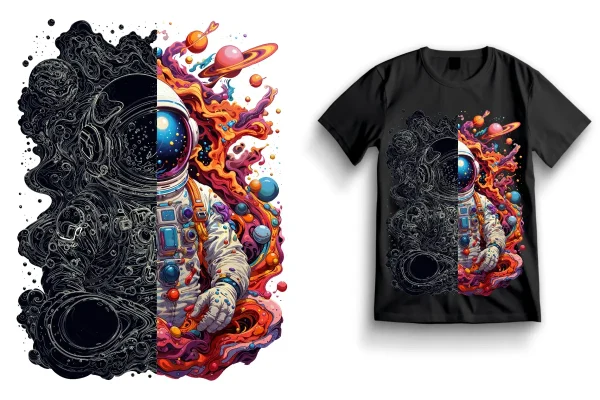
Staying ahead in the fast-paced world of apparel customization requires production tools that deliver vivid detail without draining your operational budget. While traditional garment decoration methods often force creators to choose between high setup investments and limited color palettes, modern digital solutions provide an efficient alternative. Commercial decorators and emerging fashion labels are increasingly relying on high-fidelity dtf transfers to expand their design capabilities. This revolutionary DTF printing system allows multi-colored graphics and fine vector lines to be seamlessly applied to almost any garment type, maximizing creative freedom and structural durability.
The Technical Blueprint of Direct-to-Film Transfers
Understanding why this method dominates the contemporary textile industry requires a close look at its unique layered process. Unlike direct-to-garment printing, which fires ink directly into porous fibers, this digital system creates a self-contained graphic unit on a clear carrier sheet. The process relies on highly specialized machinery, precise chemical formulations, and a multi-tiered structural system that works in complete harmony.
The foundation of the process begins with a premium polyethylene terephthalate film, coated with an advanced release agent that ensures smooth separation during application. High-end industrial printheads deposit liquid cyan, magenta, yellow, and black pigments onto this film layer to form the main image. Immediately following the color pass, a heavy, opaque layer of white ink is printed directly on top of the colored pigments. While the ink layers are completely wet, an automated system coats the sheet with a hot-melt thermoplastic polyurethane adhesive powder. This powder is then subjected to controlled infrared heat, melting into a uniform barrier that binds the digital design directly to the textile fibers during final pressing.
Eliminating Commercial Production Bottlenecks
Every commercial custom shop faces the challenge of managing tight deadlines alongside complicated multi-colored graphics. Traditional screen printing demands separate film positives, chemical emulsions, screen exposures, and intensive press setups for every single color in a design. If a client requests five shirts with a ten-color logo, the setup labor alone completely wipes out your profit margins. Digital film transfers eliminate these production boundaries by handling complex gradients, fine details, and infinite colors in a single pass.
- No Weeding or Plotter Cutting: Traditional heat transfer vinyl requires mechanical cutting and tedious manual peeling of excess materials. Digital film graphics require zero weeding because the hot-melt powder only adheres to the printed ink areas.
- Zero Minimum Order Limits: You can print a single custom graphic or an entire continuous production roll with the exact same level of physical ease, making small-batch custom apparel highly profitable.
- Reduced Setup Overhead: By sending digital designs straight from your graphic software to the printer queue, you eliminate screens, squeegees, and darkroom chemicals entirely.
By streamlining these production stages, shops can accept last-minute rush orders, expand their design catalogs, and focus more energy on customer acquisition. Sourcing your supplies from a trusted regional facility like Harwin DTF ensures your production team always works with stable, commercial-grade films designed to keep your heat presses running smoothly.
Universal Fabric Adaptation and Performance
A frequent limitation of historical textile decoration is substrate incompatibility. For example, dye sublimation produces incredible photographic quality, but it is chemically restricted to 100% polyester light-colored garments. Attempting to sublimate onto dark cotton results in an invisible or completely distorted print. Digital film graphics remove these strict fabric boundaries entirely, opening up a vast array of product offerings for your business catalog.
Because the cured hot-melt polyurethane adhesive creates a universal mechanical bond, these prints can be successfully applied to 100% cotton, organic canvas, ringspun cotton blends, pure polyester, heavy nylon jackets, and even smooth leather accessories. The thick white ink backing ensures complete opacity, meaning that pastel colors and bright white graphics retain their brilliant pop even when pressed onto dark charcoal or jet-black fabrics. Additionally, the finished graphic exhibits incredible stretchability, expanding and contracting with the knitted fabric fibers without showing signs of dry cracking or splitting.
The Strategic Importance of Local Supply Integration
When fulfillment schedules are tight and a major corporate client places an unexpected order, waiting days for an online delivery to cross the country introduces unnecessary risk. Unpredictable transit delays, damaged shipping boxes, and moisture contamination during long-distance transit can stall your shop floor. For this reason, savvy apparel decorators regularly search for high-quality dtf transfers near me to protect their production timelines and maintain total control over their supply chain logistics.
Establishing a professional relationship with a regional printing partner nearby provides an immediate safety net for your daily operations. If an artwork file contains an unexpected background transparency issue or a color profile error, a local production partner can spot the problem immediately before printing a large run. This tight feedback loop minimizes material waste, avoids expensive shipping surcharges, and gives your business the agility to offer rapid turnaround times that distant online competitors cannot match. Harwin DTF proudly serves as this essential regional partner, offering fast turnarounds and consistent print quality to keep your business moving forward.
Achieving Commercial Excellence in Regional Manufacturing
The bustling business environment across Texas requires apparel decorations that can handle heavy daily usage, industrial laundering, and demanding climates. When local shop owners search for the best dtf transfer at Houston, they look past simple price cuts and focus heavily on ink elasticity, wash stability, and color accuracy. True commercial quality means your prints maintain a smooth texture that integrates with the fabric weave rather than feeling like a rigid sheet of plastic glued to the chest.
Achieving this elite standard of finish requires strict environmental controls during the printing phase. Professional manufacturing facilities utilize heavy-duty commercial climate systems to control humidity levels, preventing static electricity from scattering excess adhesive powder onto the clear areas of the film. Furthermore, precise curing temperatures ensure that the hot-melt adhesive bonds deeply with the underlying inks, creating a uniform, reliable print that feels smooth against the skin and stays bright for years to come.
Logistical Advantages for Local Apparel Brands and Businesses
Utilizing a dedicated Houston dtf transfer provider gives regional creators an immediate competitive advantage over online operations. Instead of waiting for freight trucks to deliver your orders, local business owners can utilize quick in-person pickups or same-day courier services to inspect their physical prints before committing them to high-value garments. This close proximity is incredibly useful for event planners, sports leagues, and independent clothing labels who need to verify design details under tight deadlines.
Working with a specialized facility like Harwin DTF also protects your raw materials from the damaging effects of environmental humidity. Because raw printing films and hot-melt adhesive powders are highly sensitive to moisture absorption, skipping long transits in unconditioned delivery vehicles prevents adhesive clumping and ensures a clean, smooth transfer every single time you activate your heat press.
The Professional Application Process for Everlasting Durability
Even the absolute highest grade of digital film print will fail to achieve maximum wash durability if the final heat press process is rushed or executed incorrectly. Securing a retail-ready finish that stays anchored to the fabric requires a precise combination of time, temperature, and uniform downward pressure. Follow this professional multi-step workflow for consistent application success:
- Fabric Outgassing and Degassing: Position your blank garment on the lower platen of your heat press and lock it down for 4 to 5 seconds. This quick step removes natural moisture trapped inside the fabric weave and flattens out wrinkles, creating a perfectly smooth surface for the adhesive to grip.
- Design Alignment: Arrange your printed film sheet onto the warm fabric with the ink side facing down. The transparent nature of the carrier sheet makes it simple to center your design using standard alignment tools or physical rulers.
- The Primary Application Press: Set your commercial heat press to 300°F to 315°F for 100% cotton garments, or lower the temperature to 275°F to 285°F for delicate polyester blends to avoid fabric scorching. Apply firm, steady pressure (around 50 to 60 PSI) for exactly 12 to 15 seconds.
- Cooling and Controlled Film Removal: Carefully slide the garment off the heat press and place it flat on a clean cooling table. Allow the design to cool completely to room temperature before peeling the carrier film away in a low, smooth, continuous motion. Peeling the film while it is still warm can tear the edges of the ink before the adhesive sets.
- The Secondary Soft-Hand Seal: Place the exposed print back onto the heat press, cover the graphic with a sheet of premium silicone finishing paper or matte parchment, and press a second time for 5 to 7 seconds. This final step drives the ink deep into the fabric weave, removes any residual shiny plastic texture, and locks in maximum wash durability.
Frequently Asked Questions
How many machine wash cycles can premium film transfers survive?
When applied using a professional commercial heat press with accurate time, temperature, and pressure settings, high-quality digital prints regularly last for 50 or more laundry cycles before showing signs of wear. For the absolute best results, advise your customers to wash their custom clothing inside out in cold water and avoid using high-heat drying settings or harsh chemical bleaches.
Can I successfully apply these digital designs using a standard home iron?
While a standard household iron can technically melt the adhesive powder, it is strongly discouraged for retail or commercial client orders. Handheld irons cannot provide the perfectly uniform heat distribution or the intense, heavy downward pressure required to fuse the hot-melt adhesive deep into the textile fibers, which frequently leads to premature edge peeling after the first few washes.
What is a digital gang sheet and how does it help lower my production costs?
A gang sheet is an efficient design layout strategy where you arrange multiple distinct graphics, logo sizes, and custom neck labels close together across a single wide roll of transfer film. By grouping your various design projects onto one continuous sheet, you maximize your printable area, eliminate material waste, and secure the lowest possible wholesale pricing for your bulk orders.
How should I format my artwork files to ensure sharp print resolution?
To secure perfectly crisp results with no blurry edges, always save and submit your design files in high-resolution vector formats like PDF, SVG, or EPS. If you are working with raster images like PNG files, ensure the design is saved at a minimum of 300 DPI with a completely transparent background so no unwanted borders or white bounding boxes appear on your finished garments.
Future-Proofing Your Custom Apparel Production
Scaling a modern custom apparel brand or increasing the daily output of a busy commercial print shop requires a steady foundation of reliable materials, predictable workflows, and fast fulfillment speeds. By adopting advanced digital transfer systems, your production team can eliminate time-consuming setups, minimize labor costs, and accept highly complex artwork requests with absolute confidence. Whether you are printing small runs of detailed streetwear or thousands of matching corporate polos, consistent material quality is what keeps your clients coming back. Partner with Harwin DTF today to optimize your daily production lines, achieve exceptional print durability, and unlock the full growth potential of your apparel business.