
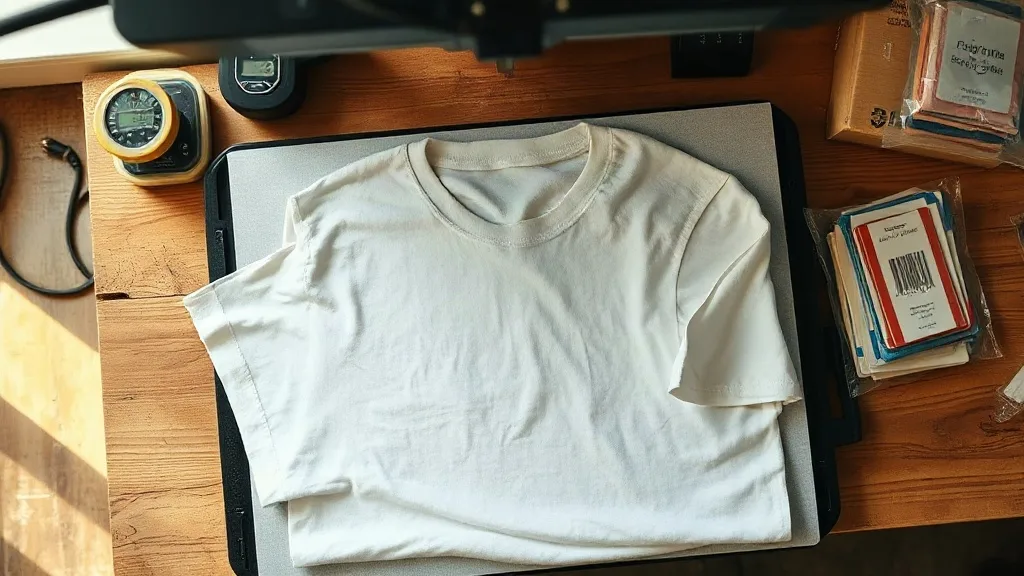
Most people who order dtf transfers for the first time expect the process to feel like vinyl. It doesn't. The film is thin, the powder side is easy to contaminate, and the press settings that worked for heat transfer vinyl will often leave you with a cracked or milky-looking print. This guide is written from the perspective of someone running a small shop with limited floor space and no appetite for reprints, and it focuses on the decisions that actually change your output: fabric selection, press variables, storage, and the math behind pricing.
What dtf actually is, in shop terms
Direct-to-film printing means a pigment ink design is printed onto a coated PET film, then covered with a hot-melt adhesive powder while the ink is still wet. The powder sticks to the ink only, gets cured, and becomes the layer that bonds to fabric under heat. From your side of the counter, that produces three practical consequences worth understanding before you buy anything.
First, the adhesive is on the surface of the print, not behind it. Second, the film carrier is not the final product, so peel timing matters and it changes with fabric and temperature. Third, because the ink sits on top of the garment rather than soaking in, the hand feel depends heavily on how much white ink is under the color layer. A design with a large white base printed on a light shirt will feel thicker than a design printed without that base.
Why the white layer drives everything
On dark garments, DTF requires a white ink layer beneath the CMYK. That white layer is what makes colors pop, and it is also what makes the print stiff and opaque. If you print the same artwork on a white shirt with no white base, the result is softer, more breathable, and closer to a screen print in feel. Many shops don't realize they can request this, then wonder why their dark-shirt prints feel like a plastic patch. When you order, ask specifically whether the white layer is full, reduced, or omitted.
Testing fabrics before you commit to a job
The single most useful habit I picked up was keeping a scrap bin of every blank I stock. Before quoting a large order, I press a small test transfer on each fabric type and wash it twice. That sounds slow, but it has saved me from more than one bad batch.
- 100% cotton: the easiest surface. Bonds reliably, washes well, and tolerates a slightly wider temperature window.
- Cotton/poly blends: generally fine, but the poly content changes how the film releases. Peeling too early can pull the adhesive off with the carrier.
- 100% polyester: the risky one. High heat can cause dye migration, where the garment's dye sublimates into the print and tints it. Lower temperatures and shorter dwell times help, and a lower-melt adhesive powder is worth the extra cost.
- Nylon and treated performance fabrics: often need a different chemistry entirely. Test before promising anything.
- Water-resistant or coated fabrics: usually a no. The coating blocks the adhesive from reaching the fiber.
Dye migration deserves a special mention because it doesn't show up immediately. A red polyester hoodie can look perfect coming off the press and turn muddy pink after a week in a warm car. If you print on poly, do a heat test on an inconspicuous area first, and consider a migration-blocking underbase for saturated dark colors.
Press settings that actually work
There is no universal recipe, but there is a reliable starting point: around 150 to 160 degrees Celsius, medium pressure, and 10 to 15 seconds for the transfer step, followed by a short second press after peeling. Adjust from there based on your test results rather than chasing someone else's numbers from a forum.
Pressure matters more than most people think
Too little pressure and the adhesive never fully contacts the fabric, which shows up as edges lifting after a few washes. Too much pressure and the powder layer gets flattened into the weave, which gives you a stiff, shiny patch and can push adhesive out past the design edge. If your press has a pressure gauge, note the setting that gives a clean bond on your standard cotton blank and treat it as your baseline.
Peel timing changes the finish
Cold peel gives a matte, slightly textured surface and is generally the safer choice for detailed artwork. Hot peel is faster for production runs but demands confidence, because a rushed peel on a hot print can distort fine lines. Whatever you choose, be consistent across a batch. Mixed peel timing in one order is how you end up with two shirts that look like they came from different suppliers.
Don't skip the second press
After peeling the carrier, a short press of 5 to 8 seconds over parchment or a protective sheet settles the adhesive into the fibers and improves wash durability noticeably. It takes seconds and it is the difference between a print that survives thirty washes and one that starts cracking at ten.
Storage, humidity, and the shelf life problem
Transfers are not inert. The adhesive powder absorbs moisture, and humid film prints poorly, with patchy bonding and a tendency for the powder to clump. Keep unused transfers in a sealed bag with a desiccant packet, stored flat and away from direct sunlight and heat sources. A shop near a steamy kitchen or with a poorly ventilated back room will see problems faster than a dry studio.
As a rule, plan to use stock within a few months. If you are ordering in bulk to hit a price break, be honest with yourself about how fast you'll move it. Cheap per-unit pricing is worthless if a third of the box goes bad before you print it.
The cost math most shops get wrong
Pricing DTF by the transfer cost alone is a fast route to thin margins. A realistic per-shirt cost includes the transfer, the blank, your labor for pressing and peeling, packaging, and a provision for failure. Even a five percent failure rate meaningfully changes your break-even point on a fifty-piece order.
A simple way to sanity check: take your total material cost for a job, add your hourly rate multiplied by realistic minutes per piece (pressing, peeling, folding, bagging), then divide by the number of sellable units. If the resulting number is uncomfortably close to your selling price, the job isn't profitable, no matter how good the transfer price looked on the invoice.
Finding a supplier without wasting a week
If you are searching for dtf transfers near me, the useful filter isn't distance, it's turnaround and consistency. A supplier two hours away that ships next day beats a local pickup that takes a week to schedule. Ask three questions before committing: what is your typical production turnaround, do you offer gang sheets so I can consolidate small designs, and can you tell me which powder you use for polyester?
Order a small sample first and press it on your worst-case fabric. A supplier who handles that request well is usually a supplier who handles problems well too.
Frequently asked questions
How many washes should a DTF print survive?
With correct pressing and a second press after peeling, most cotton and cotton-blend prints hold up well past thirty home washes. Polyester and performance fabrics vary more, and improper storage or a rushed peel will shorten that considerably.
Can I print DTF on a shirt that already has a print on it?
You can, but you need a flat surface and enough clearance for the press. Printing over an existing print usually traps air and creates an uneven bond, so it's better to work around the existing design or use a smaller transfer placed on clean fabric.
Why does my print look dull after washing?
Dullness after washing usually points to incomplete curing of the powder or a peel that happened too early, which leaves adhesive residue on the surface. Wash the garment inside out in cold water and check whether the issue is surface residue or actual ink loss before changing your press settings.
Is a gang sheet worth it for small orders?
For shops running several small jobs at once, yes. Gang sheets let you place multiple designs on one film, which cuts waste and brings the per-piece cost down. The tradeoff is that you need to plan your layout carefully, since you can't easily reprint a single element.
Do I need a special press for DTF?
A standard heat press with reliable temperature and pressure control works fine. What matters more is consistency: a press that holds temperature steadily and lets you repeat the same pressure will outperform a bigger machine you can't calibrate.